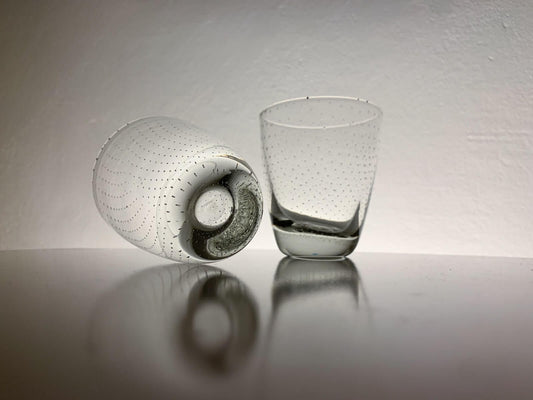
Collection: Gunnel Nyman
Gunnel Nyman: Early Life & Education
Gunnel Anita Gustafsson‑Nyman (1909–1948) was born in Turku and moved to Helsinki with her family in childhood. Trained at Helsinki’s School of Industrial Arts in furniture design under Arttu Brummer, she initially worked in functionalist furniture, metalwork and lighting before turning her attention to glass design in the 1930s–40s.
Breakthrough in Glass
Although not formally educated in glassmaking, Nyman began designing for Finnish glassworks during the late 1930s. She collaborated with Riihimäki, Karhula‑Iittala and later Nuutajärvi, where she produced both everyday wares and expressive art glass. Her early adoption of techniques that embraced light and clarity helped spark a shift in Finnish glass aesthetics.
Signature Style & Techniques
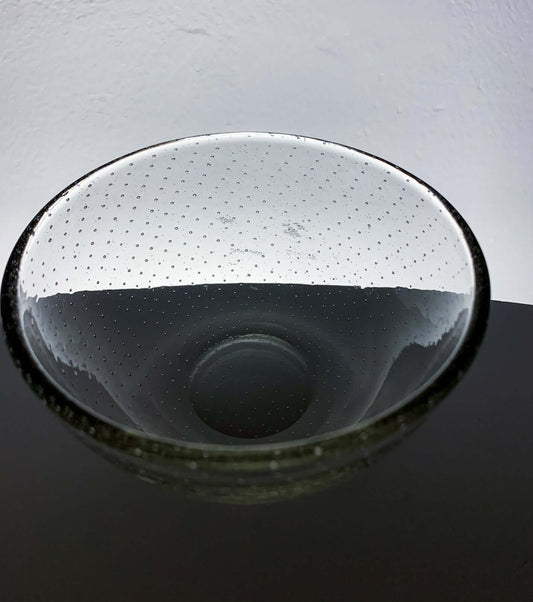
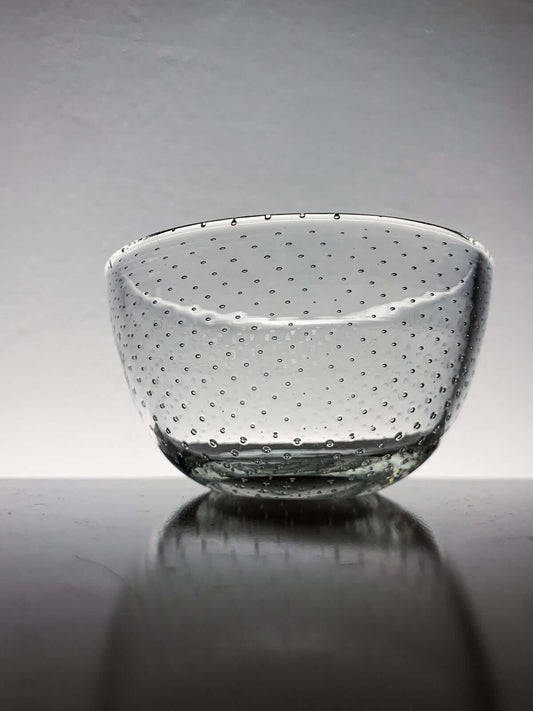
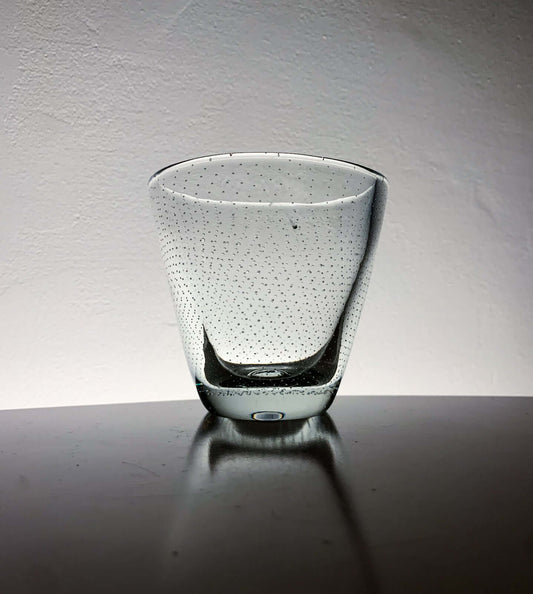
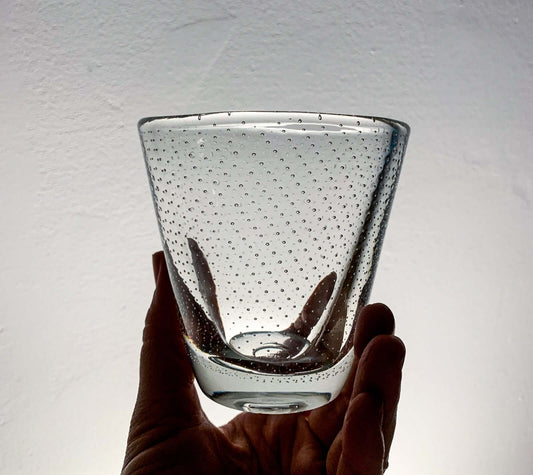
Gunnel Nyman’s pieces are recognised for their flowing, organic forms and pioneering use of microbubble decoration—tiny air inclusions that enhance texture and refract light. Vases like Calla, Serpentiini and Helminauha illustrate her mastery of shape and material, creating objects that balance utility and sculptural presence.
Recognition & Influence
In her lifetime and after, Gunnel Nyman’s work received international recognition: she won medals at the Paris World Exposition and Milan Triennials, and in 1951 was awarded a gold medal posthumously. Her creations are held in major museum collections around the world, including the Metropolitan Museum of Art and the National Gallery of Victoria.
Legacy & Aesthetic Philosophy
Gunnel Nyman believed that glass was uniquely suited to express light and form, famously considering it a “solid liquid” whose transparency and fluidity were its greatest qualities. Although her career was cut short, her designs laid the groundwork for the modernist movement in Finnish glass and continue to be prized by collectors and historians alike.