Collection: Sven Palmqvist
Early Career at Orrefors
Sven Palmqvist (1906–1984) ranks among the defining figures of twentieth century Swedish glass design. Born in Småland, the heart of Sweden's glassmaking region, he joined Orrefors in 1928 and remained with the company for more than four decades. Throughout this period he helped transform Scandinavian crystal from traditional decorative glass into a modern design language appreciated worldwide.
Innovation in Glass
Palmqvist was not only a designer but also an inventor of new glassmaking techniques. During the late 1930s he developed the celebrated Kraka technique, producing a delicate crackled pattern suspended inside perfectly clear crystal. In the 1950s he introduced the centrifuge casting method that made the Fuga collection possible, combining sculptural form with efficient production. His later Ravenna series became equally recognizable for its mosaic-like fields of colour surrounded by finely polished crystal.
International Recognition
The Fuga collection brought Palmqvist the Grand Prix at the Milan Triennale in 1957, then regarded as the highest international distinction in industrial and decorative design. His work entered the permanent collections of the Museum of Modern Art in New York, Sweden's Nationalmuseum, and many leading museums devoted to decorative arts and modern design.
Lasting Legacy
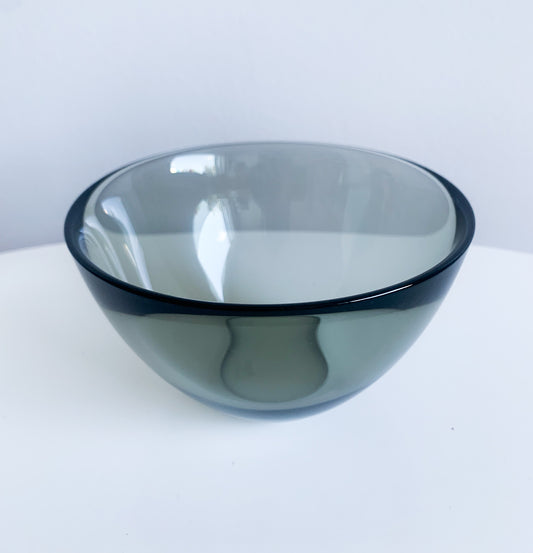
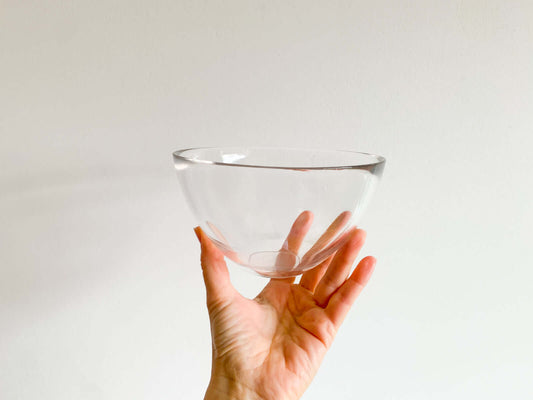
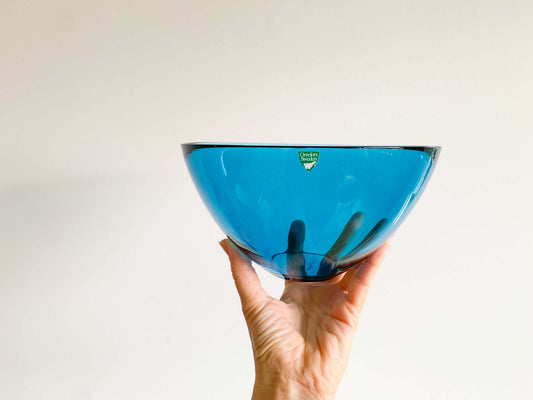
Although Palmqvist designed tableware, bowls, vases, engraved crystal, and art glass in many different styles, his work is united by technical precision and a constant search for new possibilities within crystal. Collections including Kraka, Fuga, Ravenna, Selena, and Colora remain among the most recognizable achievements of Swedish mid century glass. Today his pieces continue to be sought after by collectors as milestones in the history of Scandinavian modernism, combining innovation, craftsmanship, and timeless design.